

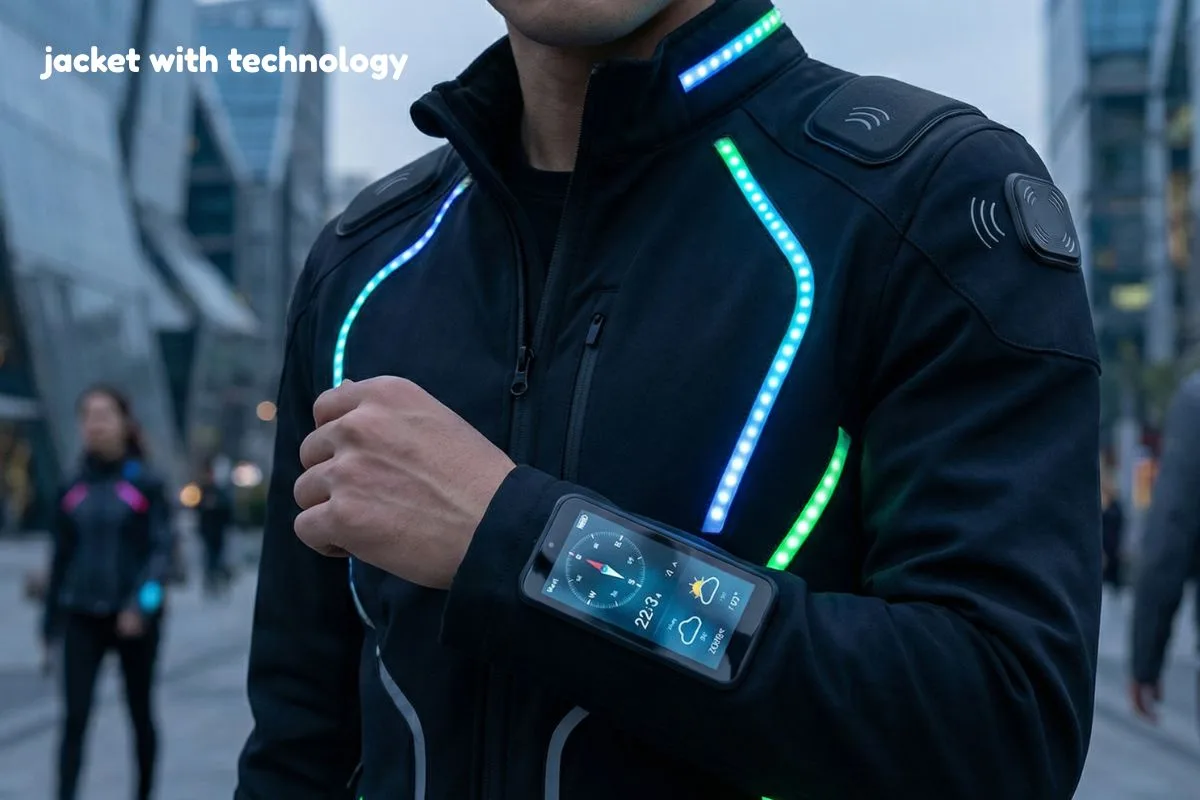
The fashion world is evolving beyond recognition. We’re no longer searching for just style we demand function. Enter the jacket with technology. This isn’t science fiction anymore; it’s reality for commuters in New York, construction workers in Berlin, and hikers in the Canadian Rockies.
If you’ve been researching a jacket with technology, you’ve probably noticed most websites focus on “cool gadgets” or outdated models. They miss the critical details. You want to know how these jackets keep you warm, how long batteries actually last, whether they’re worth the investment, and most importantly how to maintain them without destroying the electronics.
In this comprehensive guide, we explore every angle of the modern jacket with technology to help you make an informed decision based on real-world performance, technical specifications, and practical usability.
What Exactly is a Jacket With Technology?
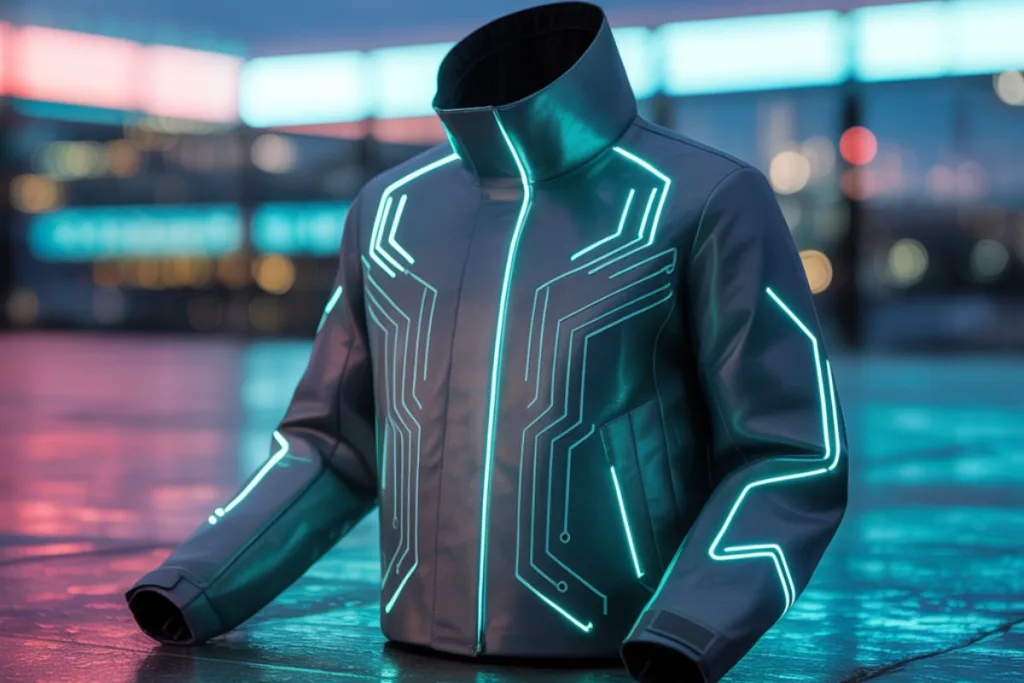
A jacket with technology, often called a “smart jacket” or “techwear,” is a garment that integrates electronic components or advanced bio-engineering directly into the fabric. Unlike standard coats that passively protect you from weather, a jacket with technology actively interacts with your environment or body.
When you wear a jacket with technology, you’re essentially wearing a wearable machine designed to improve your daily life through:
- Active heating or cooling systems that respond to temperature
- Smartphone connectivity via Bluetooth or NFC chips
- Advanced materials like graphene or self-healing fabrics
- Safety features including LED lights and reflective technology
The most popular version of a jacket with technology remains the heated jacket, but the category has expanded dramatically to include cooling fans, solar charging capabilities, and touch-sensitive control surfaces.
The Three Main Categories of Tech Jackets
To understand the marketplace, we must categorize the jacket with technology into three distinct groups:
- Thermal Tech: Battery-powered heated or fan-cooled apparel
- Connectivity Tech: Bluetooth, NFC, and smartphone integration
- Fabric Tech: Graphene, self-healing materials, and advanced waterproofing
Each category serves different needs, and some premium models combine multiple technologies into a single jacket with technology.
The Heated Jacket: Most Popular Type of Tech Outerwear
By far, the most searched-for jacket with technology is the battery-powered heated coat. This segment dominates the market, but most reviews fail to explain the critical technical differences that separate mediocre products from exceptional ones.
How Battery-Powered Heating Elements Work
A heated jacket with technology uses thin, flexible heating elements woven into the fabric lining. These elements are typically made from carbon fiber or graphene a crucial distinction we’ll explore shortly. When you connect a battery pack (usually stored in an interior pocket), electrical current flows through these elements, generating warmth within 30-90 seconds.
Most quality heated jacket with technology models feature three heating zones:
- Chest panels: Front warmth for core temperature
- Back panel: Largest heating area for overall body heat
- Sleeve elements: Optional in premium models for complete coverage
Temperature control happens through a simple button system, usually offering low, medium, and high settings. Each setting draws different amounts of power from the battery, directly affecting how long your jacket with technology will keep you warm.
Carbon Fiber vs. Graphene Heating: The Critical Difference
Here’s what most competitors won’t tell you about your jacket with technology: the heating element material fundamentally changes the performance.
Carbon Fiber Heating Elements (Standard in most jackets):
- Heats up in 30-60 seconds
- Good durability for 3-5 years
- Flexible and lightweight
- Risk of “hot spots” where temperature concentrates unevenly
- More affordable ($100-200 range)
Graphene Heating Elements (Next-generation technology):
- Heats up in 10-15 seconds (nearly instant)
- 200 times stronger than steel despite being lighter
- Conducts heat more evenly across entire surface
- Eliminates burning risk from hot spots
- Superior durability (5-10 years)
- Higher cost ($250-400 range)
If you’re investing in a premium jacket with technology, graphene heating is worth the extra cost. The even heat distribution means you can safely use higher temperatures without the discomfort of concentrated heat patches that plague carbon fiber models.
Battery Specifications That Actually Matter
Your jacket with technology is only as good as its power source. Here’s what you need to understand about battery systems:
Voltage Systems:
5V Systems (Budget models):
- Same voltage as phone chargers
- Provides 3-5 hours of heat on low setting
- Slower heat-up time
- Often doubles as phone power bank
- Best for: Mild cold (40-50°F / 4-10°C)
7.4V Systems (Industry standard):
- Sweet spot for most users
- Provides 4-8 hours depending on setting
- Optimal balance of power and battery life
- Most common in quality jacket with technology models
- Best for: Moderate to severe cold (20-40°F / -7 to 4°C)
12V Systems (Maximum power):
- Professional/industrial grade
- Provides 2-4 hours of intense heat
- Fastest heat-up time
- Heavy-duty for extreme conditions
- Best for: Extreme cold (-20 to 20°F / -29 to -7°C)
Battery Capacity and Charge Cycles:
Most jacket with technology batteries range from 5,000mAh to 10,000mAh. Here’s what those numbers mean in practical use:
- 5,000mAh: 3-5 hours on medium setting
- 7,500mAh: 5-7 hours on medium setting
- 10,000mAh: 7-10 hours on medium setting
Every battery has a lifespan measured in charge cycles. A quality jacket with technology battery typically lasts 300-500 full charge cycles before capacity degrades noticeably. At one charge per day, that’s roughly 2-3 years before you need a replacement battery (usually $30-60 from the manufacturer).
Pro Tip: Look for a jacket with technology that offers “pass-through charging” the ability to charge your smartphone from the jacket’s battery while simultaneously heating the jacket. This feature transforms your heated coat into a mobile power station.
Who Benefits Most From a Heated Jacket With Technology?
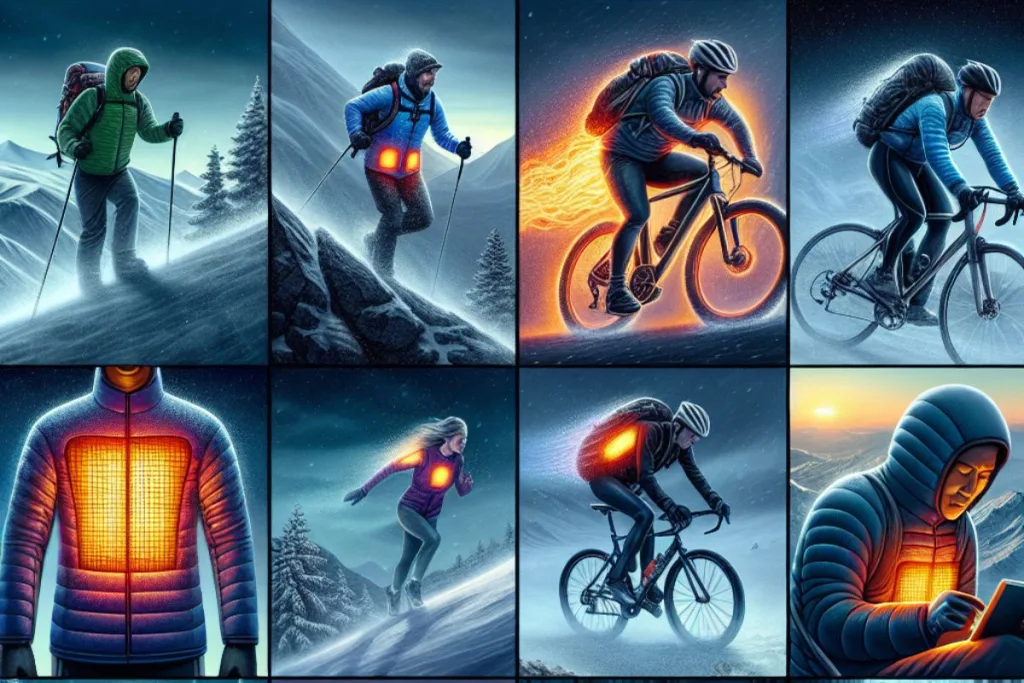
While anyone facing cold weather appreciates warmth, certain groups gain extraordinary value from a heated jacket with technology:
Construction Workers and Outdoor Laborers: A heated jacket with technology isn’t just comfort it’s a safety tool. Cold hands lose dexterity, increasing accident risk. Maintaining core body temperature improves focus and productivity during winter months. For outdoor workers, a quality heated jacket with technology pays for itself through improved work efficiency.
Winter Sports Enthusiasts: Skiers, snowboarders, and ice fishers benefit from controlled warmth without bulk. Traditional layering restricts movement; a single heated jacket with technology provides freedom of motion while maintaining optimal temperature during chairlift rides or stationary periods.
Medical Benefit Users: People with Raynaud’s disease (reduced blood flow to extremities) or arthritis find therapeutic value in a heated jacket with technology. The consistent, controlled warmth improves circulation and reduces pain during cold weather exposure. This isn’t just comfort it’s a medical benefit that improves quality of life.
Commuters and Cyclists: Urban professionals waiting for trains or biking to work face wind chill that makes temperatures feel 10-20 degrees colder. A heated jacket with technology with pass-through charging means you arrive at work warm and with a fully charged phone.
Connected Clothing: When Your Jacket Talks to Your Phone
The second major category of jacket with technology focuses on smartphone integration and connectivity features. While less common than heated models, connected jackets represent the future of wearable technology.
The Google Jacquard Legacy and Touch-Sensitive Fabrics
In 2017, Google and Levi’s launched Project Jacquard a jacket with technology featuring touch-sensitive cuffs. By swiping or tapping your sleeve, you could control music playback, answer calls, or get navigation directions without removing your phone from your pocket.
While that specific collaboration evolved, the core concept of the connected jacket with technology continues to develop. Modern versions use conductive threads woven directly into fabric, creating touch-sensitive areas that communicate with your smartphone via Bluetooth.
How Touch-Sensitive Tech Works in a Jacket With Technology:
Conductive metallic threads are woven into specific areas (usually the left cuff). When you touch these areas, capacitive sensors detect the gesture similar to how your phone screen works. A small Bluetooth module (often integrated with the battery system) transmits commands to your paired smartphone.
Common gestures in a connected jacket with technology:
- Swipe up: Volume increase
- Swipe down: Volume decrease
- Double tap: Play/pause music
- Hold: Activate voice assistant
- Three taps: Answer/decline calls
NFC Integration: The Digital Business Card
Near Field Communication (NFC) represents another frontier for the connected jacket with technology. An NFC chip (about the size of a postage stamp) can be sewn into the cuff or chest area of your jacket.
Practical Uses for NFC in a Jacket With Technology:
- Digital business cards: Someone taps their phone to your sleeve and instantly receives your contact information
- Social media sharing: Quick-share your Instagram or LinkedIn profile
- Access control: Use your jacket with technology as a keycard for office buildings or hotels
- Payment integration: Some experimental models allow contactless payment through your jacket
The beauty of NFC in a jacket with technology is that it requires no battery power the NFC chip draws power from the scanning device itself.
Built-In Tech: Headphones, Speakers, and Charging Ports
Premium connected jacket with technology models integrate additional features:
Integrated Audio Systems: Small speakers built into the collar provide audio without earbuds. While sound quality won’t match premium headphones, the convenience of hands-free calls and navigation directions while cycling or working makes this feature valuable in a jacket with technology.
USB Charging Ports: External USB ports (usually on the chest or sleeve) allow you to charge devices without opening your jacket. In a heated jacket with technology, this often connects to the same battery pack powering the heating system.
Solar Panel Integration: Experimental models feature flexible solar panels sewn into the shoulders and upper back. While current technology can’t fully power a heated jacket with technology, solar integration can extend battery life by 20-30% on sunny days or keep your phone charged during outdoor activities.
Cooling Technology: Jackets With Fans for Hot Weather
A jacket with technology isn’t limited to winter. In hot climates Australia, southern USA, Middle East, India cooling technology becomes essential safety equipment.
How Fan-Cooled Jackets Work (The Kuchofuku System)
Originally developed in Japan under the brand name Kuchofuku, the fan-cooled jacket with technology uses small electric fans built into the lower back area. These fans draw ambient air into the jacket, creating circulation around your torso.
The Science Behind Cooling Jackets:
As fans circulate air, your sweat evaporates more quickly. This evaporative cooling effect can lower your perceived temperature by 10-15°F (5-8°C). The jacket with technology essentially creates a personal microclimate, similar to how evaporative coolers (swamp coolers) work for buildings.
Most fan-cooled jacket with technology models use:
- Two small fans: 3-4 inches in diameter
- Battery power: 5V USB power banks or rechargeable battery packs
- Runtime: 4-8 hours on standard settings
- Multiple speeds: Low, medium, high airflow
Who Needs a Cooling Jacket With Technology?
Construction Workers (Primary Market): Heat stroke kills dozens of construction workers annually in hot climates. A cooling jacket with technology isn’t luxury it’s lifesaving safety equipment. OSHA (Occupational Safety and Health Administration) recognizes heat stress as a serious workplace hazard, and employers increasingly provide cooling vests or jackets as protective equipment.
Warehouse and Manufacturing Employees: Indoor facilities without climate control can reach dangerous temperatures. A cooling jacket with technology allows workers to maintain productivity without risking heat exhaustion.
Outdoor Event Staff: Security personnel, festival workers, and outdoor venue staff spend hours in direct sunlight. A cooling jacket with technology makes these jobs sustainable during summer months.
Athletes and Fitness Enthusiasts: Runners and cyclists training in heat use cooling vests to prevent overheating during intense workouts. While full jacket with technology models are less common for sports, cooling vest variants serve similar functions.
Can One Jacket With Technology Do Both Heating and Cooling?
Current technology limitations make dual-function challenging. Heating requires insulation to retain warmth, while cooling requires breathability to promote airflow opposite requirements.
However, some experimental jacket with technology models use:
- Reversible designs: Insulated side for winter, breathable side for summer
- Modular systems: Attachable heating or cooling units
- Smart climate control: Sensors that automatically heat or cool based on body temperature
These remain premium products ($400-600 range) and aren’t yet mainstream in the jacket with technology market.
Advanced Fabric Technology: The Science Behind Smart Materials
The third category of jacket with technology focuses on the materials themselves rather than added electronics. These innovations represent the cutting edge of textile engineering.
Graphene: The Wonder Material in Tech Jackets
Graphene, a single layer of carbon atoms arranged in a hexagonal lattice is revolutionizing the jacket with technology industry beyond just heating elements.
Properties That Make Graphene Ideal for Jackets:
Strength: Graphene is 200 times stronger than steel despite being one atom thick. When woven into fabric, a graphene-infused jacket with technology resists tears and abrasions far better than traditional materials.
Thermal Conductivity: Graphene conducts heat exceptionally well, allowing a heated jacket with technology to distribute warmth evenly. This same property helps regulate temperature conducting excess heat away from your body when you’re too warm.
Lightweight: Despite incredible strength, graphene adds virtually no weight. A graphene-enhanced jacket with technology feels lighter than traditional heavy-duty winter coats while providing superior protection.
Water Resistance: Graphene coatings create hydrophobic surfaces that repel water at the molecular level. This makes a graphene jacket with technology naturally water-resistant without heavy rubber or plastic treatments.
Self-Healing and Self-Cleaning Fabrics
Nanotechnology enables some advanced jacket with technology models to repair minor damage automatically.
How Self-Healing Fabric Works:
Microcapsules containing liquid polymer are embedded in the fabric. When the material tears or punctures, these capsules break open. The liquid polymer flows into the damage, then hardens when exposed to air or body heat, effectively “healing” small holes and tears.
Current limitations: Self-healing only works on punctures smaller than 5mm and requires several hours to complete. A jacket with technology with self-healing fabric won’t magically repair a large tear, but it prevents small snags from becoming bigger problems.
Self-Cleaning Nanotechnology:
Titanium dioxide nanoparticles or similar coatings create superhydrophobic surfaces. Water and dirt literally roll off the surface of a self-cleaning jacket with technology instead of soaking in or staining.
This technology mimics lotus leaves in nature—the “lotus effect”—where microscopic surface structures prevent water adhesion. For urban commuters and outdoor workers, this means a jacket with technology that stays cleaner between washes.
Aerogel Insulation and Space-Age Materials
Aerogel, developed by NASA, is the world’s lightest solid material—99.8% air. Some premium jacket with technology models incorporate aerogel insulation for extreme warmth without bulk.
Benefits of Aerogel in a Jacket With Technology:
- Extreme insulation: R-value (insulation measurement) 10x higher than traditional down
- Minimal bulk: 1/4 the thickness of down for equivalent warmth
- Breathability: Despite insulation, aerogel doesn’t trap moisture
- Durability: Unlike down, aerogel maintains insulation even when wet
Cost Consideration: Aerogel manufacturing remains expensive. A jacket with technology using aerogel insulation typically costs $400-800, making it a premium option for extreme cold weather professionals or serious mountaineers.
Safety and Visibility Features in Tech Jackets
For urban commuters and cyclists, safety features transform a jacket with technology from convenience to potentially lifesaving equipment.
LED Lighting Systems for Cyclists and Commuters
Cyclists face significant danger from vehicles that don’t see them in low-light conditions. A jacket with technology with integrated LED systems solves this visibility problem.
Types of LED Integration:
Static LED Strips: Sewn into seams along the back, shoulders, and arms. These always-on lights make you visible from 360 degrees. Battery life: 20-40 hours on standard coin cell batteries.
Turn Signal Systems: Advanced jacket with technology models include wireless controls (handlebar-mounted or gesture-activated) that trigger left/right turn signals on the back panel. This communicates intent to drivers, reducing accident risk.
Automatic Light Sensors: Premium models use ambient light sensors to automatically activate LEDs when darkness falls, ensuring you’re always visible without remembering to turn on safety lights.
Integrated vs. Heated Systems: Some heated jacket with technology models power LED lights from the same battery pack used for heating, eliminating the need for separate batteries.
Reflective Technology and High-Visibility Options
Beyond active lighting, reflective materials in a jacket with technology provide passive safety.
3M Scotchlite Reflective Materials: When headlights hit reflective strips on a jacket with technology, they reflect light directly back to the driver, making you visible from hundreds of feet away. Modern reflective tech is subtle in daylight but brilliantly visible at night.
360-Degree Visibility Patterns: Safety-focused jacket with technology designs place reflective strips on:
- Shoulders and upper arms (side visibility)
- Back panel (rear visibility)
- Chest (front visibility)
- Sleeves (dynamic movement draws attention)
For construction workers, high-visibility jacket with technology models meet ANSI/ISEA 107 standards, making them acceptable jobsite safety gear that also provides heating in cold weather.
Comparison Guide: Which Tech Jacket Fits Your Needs?
Choosing the right jacket with technology depends on your specific requirements, climate, and budget.
| Feature | Heated Jacket With Technology | Smart/Connected Jacket With Technology | Cooling Jacket With Technology | Advanced Fabric Jacket With Technology |
| Primary Purpose | Active warmth generation | Phone integration & control | Temperature reduction | Performance & durability |
| Best For | Winter sports, outdoor work, cold climates | Commuters, travelers, tech enthusiasts | Construction, hot climates, warehouse work | Hikers, extreme weather, athletes |
| Technology Used | Carbon fiber or graphene heating elements | Bluetooth, NFC, conductive threads | Electric fans, air circulation systems | Graphene, aerogel, nanotechnology |
| Battery Required | Yes (7.4V typical, lasts 4-8 hours) | Yes (smaller battery, lasts 20-40 hours) | Yes (5V, lasts 4-8 hours) | Sometimes (for active features) |
| Price Range | $100 – $350 | $150 – $450 | $80 – $220 | $200 – $600 |
| Weight | Medium-Heavy (battery adds 8-12 oz) | Light-Medium | Light-Medium | Light |
| Maintenance | Remove battery to wash, air dry only | Standard care, avoid water on electronics | Clean fans regularly, air dry | Often machine washable |
| Lifespan | 3-5 years (heating elements), battery 2-3 years | 2-4 years (electronics wear) | 2-3 years (fan motors) | 5-10 years (durable materials) |
| Climate Suitability | Below 50°F (10°C) | All climates | Above 70°F (21°C) | All climates |
How to Wash a Jacket With Technology (Expert Care Guide)
This is the critical information competitors consistently skip. Many people fear washing a jacket with technology because of the electronics, leading to dirt buildup and reduced lifespan. Follow these expert steps to safely clean your tech apparel.
Step-by-Step Washing Instructions
Step 1: Remove the Battery Pack
This is absolutely crucial. NEVER wash a jacket with technology with the battery pack connected. Water and electricity create short circuits that permanently damage heating elements or control modules.
Check all pockets—some jacket with technology models have secondary battery compartments. Remove every electronic component before proceeding.
Step 2: Secure All Connections
Most heated jacket with technology models include a rubber cap or plug for the USB/power port. Place this cap firmly over the connector to prevent water from entering the electrical system.
Tuck heating element wires into their proper channels. If your jacket with technology has any loose wiring, secure it with the internal velcro straps typically provided for this purpose.
Step 3: Use a Mesh Laundry Bag
Place your jacket with technology inside a mesh laundry bag before putting it in the washing machine. This protects the heating wires from snagging on other items or getting caught in the machine’s agitator.
Without a mesh bag, wires in your jacket with technology can catch on zippers from other clothing, potentially pulling them loose from their connection points.
Step 4: Select Gentle Cycle, Cold Water Only
Set your washing machine to:
- Cycle: Gentle/Delicate
- Water temperature: Cold (never hot or warm)
- Detergent: Mild liquid detergent (no bleach, no fabric softener)
Hot water damages the plastic insulation around heating wires in your jacket with technology. This insulation prevents short circuits once damaged, the jacket becomes unsafe to use.
Fabric softener reduces the water-resistant coating on most jacket with technology exteriors. Skip it entirely.
Step 5: Air Dry Only – Never Use Machine Dryer
This is the second critical rule after removing the battery. High heat from dryers will:
- Melt wire insulation in your heated jacket with technology
- Damage waterproof coatings
- Degrade battery connection points
- Warp or melt any plastic components
Instead, hang your jacket with technology on a sturdy hanger in a well-ventilated area. It may take 24-48 hours to fully dry, but this preserves all electronic components.
DO NOT reconnect the battery until the jacket is completely dry—even slightly damp conditions can cause corrosion on electrical contacts.
Battery Maintenance and Charge Cycle Optimization
Your jacket with technology battery requires specific care to maximize lifespan.
Optimal Storage Charge: When storing your jacket with technology for extended periods (more than 2 weeks), charge the battery to 40-60% capacity. This voltage level minimizes degradation during storage.
Avoid Complete Discharge: Don’t let your jacket with technology battery drain to 0%. Lithium-ion batteries suffer damage when completely discharged. Recharge when the indicator shows 20-30% remaining.
Clean Battery Contacts: Once per season, use a dry cotton swab to clean the metal contacts where the battery connects to your jacket with technology. Dirt and oxidation reduce electrical conductivity, causing heating problems.
Temperature Considerations: Store your jacket with technology battery at room temperature (60-75°F / 15-24°C). Extreme heat or cold degrades battery chemistry, reducing capacity and lifespan.
Replacement Timeline: After 300-500 charge cycles (typically 2-3 years with daily use), expect battery capacity to drop to 70-80% of original. At this point, consider purchasing a replacement battery from the manufacturer. Most jacket with technology brands sell replacement batteries for $30-60.
Common Washing Mistakes That Ruin Tech Jackets
Mistake #1: Leaving Battery Connected Results in short circuits, fried control modules, and potential fire hazards. A destroyed jacket with technology cannot be repaired once water reaches live electrical components.
Mistake #2: Using Machine Dryer High heat melts wire insulation. Even one dryer cycle can permanently damage a heated jacket with technology. This mistake voids virtually all manufacturer warranties.
Mistake #3: Wringing Out Water Twisting or wringing your jacket with technology can break heating element wires at connection points. These breaks are often invisible but cause heating failures or dangerous hot spots.
Mistake #4: Skipping the Mesh Bag Without protection, zippers from jeans or other items can snag and pull heating wires loose inside your jacket with technology. This damage isn’t visible externally but causes function failures.
Mistake #5: Using Bleach or Harsh Chemicals Bleach and harsh detergents degrade waterproof coatings and can corrode wire insulation over time. Use only mild detergents designed for technical fabrics when cleaning a jacket with technology.
Top Brands and Where to Buy Tech Jackets
Not all jacket with technology brands deliver equal quality. Here’s an honest assessment of top manufacturers with geographic availability.
Best Brands by Category
Heated Jackets With Technology:
Ororo (USA):
- Price: $150-280
- Battery: 7.4V, 5000-7500mAh
- Heating zones: 3-5 depending on model
- Verdict: Best overall value for most users. Good build quality, reliable heating, readily available replacement batteries. Widely available in the USA and Canada.
Milwaukee (Global):
- Price: $180-300
- Battery: 12V M12 system (compatible with Milwaukee power tools)
- Heating zones: 3-5 plus heated hand pockets
- Verdict: Best for construction professionals who already own Milwaukee tools. Industrial durability. Battery interchangeability is a huge advantage. Available USA, Canada, Europe, Australia.
Gamma (USA/Canada):
- Price: $280-400
- Battery: 7.4V, 10000mAh
- Heating technology: Graphene elements
- Verdict: Premium option with superior heat distribution. Worth the cost for serious users. Limited to the North American market.
Bosch (Europe):
- Price: €150-250
- Battery: 10.8V/12V compatible with Bosch power tools
- Heating zones: 3 standard
- Verdict: European market leader. Similar tool battery compatibility to Milwaukee. Strong in Germany, UK, France.
Makita (Global):
- Price: $140-220
- Battery: 14.4V/18V (Makita tool batteries)
- Heating zones: 3
- Verdict: Budget-friendly professional option. Tool battery compatibility. Available globally with a strong Asian presence.
Smart/Connected Jackets With Technology:
Ministry of Supply (USA):
- Price: $200-400
- Features: Temperature regulation, professional styling
- Verdict: Best for business professionals wanting tech without obvious “techwear” appearance. Limited smart features but excellent temperature management.
Samsung (Global – Limited Availability):
- Price: Experimental/concept products
- Features: Full smartphone integration
- Verdict: Samsung occasionally releases connected apparel in South Korea. Rarely available in Western markets.
Xiaomi (Asia/Global):
- Price: $80-180
- Features: Basic heating plus app control
- Verdict: Budget smart option. App allows scheduling and remote control. Quality control variable. Available primarily through online retailers.
Cooling Jackets With Technology:
Kuchofuku (Japan/Global):
- Price: ¥8,000-15,000 ($60-110)
- Features: Original fan-cooled system, 4-8 hour battery
- Verdict: The innovator and still the best. Ships globally. Sizing runs small for Western markets order one size up.
Qore Performance (USA):
- Price: $150-300
- Features: Military-grade cooling, designed for tactical use
- Verdict: Premium cooling option. Used by US military and first responders. Overkill for casual users but excellent for serious applications.
Veskimo (Europe):
- Price: €100-200
- Features: Fan cooling plus evaporative technology
- Verdict: European-focused brand with better sizing for Western body types. Growing availability in the UK and Germany.
Advanced Fabric Jackets With Technology:
Arc’teryx (Canada – Global):
- Price: $400-800
- Features: Gore-Tex Pro, advanced materials
- Verdict: Premium quality, exceptional durability. Not “smart” in the electronic sense but represents peak fabric technology. Global availability.
Vollebak (UK):
- Price: $400-1000
- Features: Graphene, self-cleaning, experimental materials
- Verdict: Cutting-edge innovation. Small production runs. Ships globally but often sold out. For early adopters willing to pay for the newest technology.
Patagonia (USA – Global):
- Price: $200-600
- Features: Sustainable tech integration, H2No waterproofing
- Verdict: Balance of performance and environmental responsibility. Strong warranty and repair program. Global availability.
The Future of Jacket Technology
The jacket with technology industry evolves rapidly. Here’s what’s coming next.
Solar-Powered Jackets That Charge Themselves
Current experimental models integrate flexible solar panels into shoulder and back panels. While existing technology can’t fully power a heated jacket with technology from solar alone, hybrid systems extend battery life by 30-50% on sunny days.
Tommie Copper and Voltaic Systems are developing jackets where solar charging during a lunch break outdoors provides 2-3 additional hours of heating. For outdoor workers and hikers, this transforms a jacket with technology from battery-limited to nearly self-sustaining.
Expected Timeline: Consumer-ready solar jacket with technology models should reach market 2025-2026 at $350-500 price points.
Bio-Feedback and Smart Health Monitoring
The next frontier combines a jacket with technology with health monitoring systems.
Heart Rate Monitoring: Conductive fabric threads measure heart rate without chest straps. This data adjusts heating/cooling automatically if your heart rate spikes (exertion), the jacket with technology reduces heating to prevent overheating.
Stress Detection: Some experimental models measure heart rate variability (HRV) to detect stress levels. A stressed user might receive subtle warming to promote relaxation, while a calm user gets cooler temperatures for alertness.
Medical Applications: For elderly users or those with chronic conditions, a health-monitoring jacket with technology could alert caregivers if body temperature, heart rate, or movement patterns indicate medical distress.
Expected Timeline: Basic heart rate monitoring in premium jacket with technology models by 2026. Full bio-feedback systems 2027-2028, initially at medical-device pricing ($800-1500).
AI-Powered Climate Adaptation
Machine learning will revolutionize how a jacket with technology responds to conditions.
Personal Preference Learning: After 2-3 weeks of use, your AI-powered jacket with technology learns your temperature preferences based on:
- Time of day
- Activity level (walking vs. standing)
- Weather conditions
- Location (indoor vs. outdoor)
The jacket automatically adjusts without manual control, maintaining your ideal comfort zone.
Weather Integration: By connecting to weather APIs, a predictive jacket with technology preemptively adjusts settings. If GPS detects you’re walking toward an air-conditioned building, heating reduces before you arrive to prevent the uncomfortable hot-to-cold transition.
Expected Timeline: Basic AI features in premium jacket with technology models 2026-2027. Full predictive systems 2028-2030.
Pros and Cons of Owning a Jacket With Technology
Before investing in a jacket with technology, consider these honest assessments.
| Pros | Cons |
| ✅ Active temperature control: Adjust warmth on demand rather than relying on passive insulation | ❌ Weight increase: Battery adds 8-12 oz (225-340g) compared to standard jacket |
| ✅ Layer reduction: One heated jacket with technology replaces 3-4 traditional layers | ❌ Charging required: Another device to remember to charge daily |
| ✅ Medical benefits: Therapeutic warmth for Raynaud’s disease, arthritis, poor circulation | ❌ Higher initial cost: $100-600 vs $50-150 for quality non-tech jackets |
| ✅ Added utility: Phone charging, music control, LED safety lights | ❌ Electronic failure risk: Components can malfunction, especially after 2-3 years |
| ✅ Safety features: Visibility lights reduce accident risk for cyclists and pedestrians | ❌ Complex maintenance: Cannot casually throw in washing machine |
| ✅ Workplace safety: Prevents hypothermia (winter) or heat stroke (summer cooling jackets) | ❌ Battery replacement: Costs $30-60 every 2-3 years |
| ✅ Modern appearance: Tech-forward look appeals to urban professionals | ❌ Style limitations: Not all models look good; some very utilitarian |
| ✅ Durable materials: Graphene and reinforced fabrics last longer than standard coats | ❌ Repair difficulty: Electronics make repairs more complicated than sewing a torn seam |
| ✅ Productivity increase: Workers stay comfortable longer in extreme weather | ❌ Travel considerations: Must follow airline battery rules when flying |
Frequently Asked Questions About Jackets With Technology
Is a jacket with technology safe to wear in the rain?
Yes, quality jacket with technology models are safe in the rain. The heating elements and wiring are sealed and insulated, preventing water from reaching electrical components. Most reputable brands rate their heated jackets IPX4 (splash-resistant) or higher.
However, understand these limitations:
- The battery pack itself should NOT be submerged or exposed to heavy rain. It typically sits in an interior pocket, protected by the jacket’s outer shell.
- Never immerse a jacket with technology while wearing it (swimming, jumping in water)
- Always ensure the charging port rubber cap is securely in place before going out in rain
The low voltage used in heated jackets (5-12V) poses minimal shock risk even if slightly damp. For comparison, that’s less voltage than a car battery and similar to large batteries in power tools.
Bottom line: A jacket with technology is safe for daily use in rain, snow, and wet conditions. Just don’t go swimming while wearing it.
Can you fly with a heated jacket battery?
Yes, but you must follow airline regulations for lithium-ion batteries.
TSA/Airline Rules:
- Batteries must be in carry-on luggage, NOT checked bags
- Most jacket with technology batteries (5000-10000mAh at 7.4V) equal approximately 37-74 watt-hours
- TSA allows batteries up to 100 watt-hours without special approval
- Batteries 100-160 watt-hours require airline approval
Practical Flying Steps:
- Remove the battery from your jacket with technology before packing
- Pack the battery in your carry-on bag (not checked luggage)
- If security asks, explain it’s a rechargeable battery for a heated jacket (they see these regularly)
- The jacket itself can go in either carry-on or checked luggage once battery is removed
International Flights: Some countries have stricter rules. Always check specific airline and destination country regulations. Most major airlines post lithium battery policies on their websites.
Pro Tip: Print a copy of the battery specifications from your jacket with technology manufacturer showing watt-hours. Having documentation makes security screening faster.
How long does a jacket with technology last?
A quality jacket with technology has several components with different lifespans:
Heating Elements: 5-10 years with proper care. The carbon fiber or graphene wires rarely fail if you follow washing instructions. Most heating element failures result from improper washing (machine drying or leaving battery connected).
Battery: 2-3 years or 300-500 charge cycles, whichever comes first. Battery capacity gradually decreases—after 300 cycles, expect about 70-80% of original runtime. Replacement batteries cost $30-60 from most manufacturers.
Control Electronics: 3-5 years for Bluetooth and control modules in smart jacket with technology models. These components typically outlast the battery but eventually degrade.
Fabric and Shell: 5-10 years depending on material quality and usage. Premium jacket with technology brands use durable shells that match or exceed traditional outdoor jackets.
Overall Lifespan: Expect 3-5 years of reliable use from a mid-range jacket with technology, with the possibility of extending to 7-10 years by replacing batteries and maintaining carefully.
Comparison: A $150 jacket with technology lasting 5 years costs $30/year. A $60 regular jacket lasting 2 years costs $30/year. The tech jacket provides added benefits for the same long-term cost.
What temperature range do heated jackets cover?
Most heated jacket with technology models have three temperature settings:
Low Setting:
- Surface temperature: 95-104°F (35-40°C)
- Battery life: 6-10 hours
- Best for: Mild cold 40-50°F (4-10°C), light activity
Medium Setting:
- Surface temperature: 113-122°F (45-50°C)
- Battery life: 4-6 hours
- Best for: Moderate cold 25-40°F (-4 to 4°C), most common use
High Setting:
- Surface temperature: 131-140°F (55-60°C)
- Battery life: 2-4 hours
- Best for: Severe cold below 25°F (-4°C), stationary work
Important Note: These temperatures are at the heating element surface, not the ambient air temperature the jacket with technology can handle. A heated jacket is effective in weather ranging from 60°F down to -20°F (15°C to -29°C), with effectiveness depending on:
- Wind conditions (wind chill dramatically affects performance)
- Activity level (moving generates body heat, reducing heating needs)
- Base layers (wearing thermal underwear extends effectiveness)
Real-World Example: A construction worker in Chicago during a 15°F (-9°C) day with 15 mph winds (wind chill near 0°F/-18°C) can comfortably work 8+ hours using a medium setting with one battery charge, wearing a single base layer under their heated jacket with technology.
Are tech jackets worth the money?
This depends on your specific situation. Here’s an honest cost-benefit analysis:
You should invest in a heated jacket with technology if:
- You spend 2+ hours daily in cold weather (commuting, outdoor work, winter sports)
- You have circulation issues (Raynaud’s disease, arthritis, diabetes-related cold sensitivity)
- Your job requires cold weather work (construction, utilities, delivery services)
- You want to reduce layering bulk while maintaining warmth
- You cycle or walk in cold climates where safety lighting provides added value
ROI Calculation Example:
- jacket with technology cost: $180
- Replaces: $60 insulated jacket + $40 fleece layer + $30 thermal layer = $130 in traditional clothing
- Added benefits: Phone charging ($15 value), safety lights ($25 value), medical benefits (priceless for Raynaud’s sufferers)
- Lifespan: 4 years average
- Annual cost: $45/year
You probably don’t need a jacket with technology if:
- You live in mild climates (rarely below 50°F/10°C)
- You only face cold weather occasionally (vacation skiing once per year)
- You primarily stay indoors with brief outdoor exposure
- Budget is extremely limited (under $100 total)
Middle Ground: If you’re unsure, start with a basic heated jacket with technology in the $100-150 range. This provides the core benefit (warmth) without expensive smart features you might not use.
Can you replace the battery in a heated jacket?
Yes, most reputable jacket with technology brands sell replacement batteries. This is a crucial feature to verify before purchasing some cheaper models use proprietary batteries that become unavailable once the company discontinues the product.
Where to Buy Replacement Batteries:
- Manufacturer website: Most reliable source for genuine batteries
- Amazon: Often available with faster shipping
- Retailer where you bought the jacket: Some stores stock replacement parts
Replacement Battery Costs:
- Budget brands: $25-35
- Mid-range brands (Ororo, Milwaukee): $40-60
- Premium brands (Gamma, Voltaic): $60-90
Pro Tip: Some jacket with technology models accept standard USB power banks, giving you unlimited battery options at any electronics store. Milwaukee and Makita models use the same batteries as their power tools, meaning if you already own these tools, you have spare batteries available.
What to Look For: When buying a jacket with technology, confirm on the product page or by contacting customer service that replacement batteries will be available for at least 5 years. This ensures you’re not buying a disposable product.
Do smart features work without a phone?
The answer depends on which type of jacket with technology you own:
Heated Jackets: Heating functions work completely independently. The battery powers heating elements regardless of phone connectivity. Even if your phone dies, your jacket with technology continues providing warmth. Manual controls on the jacket (usually a button on the chest or inside pocket) let you adjust settings without any smartphone.
Smart/Connected Features: Bluetooth music control, NFC sharing, and similar features obviously require a paired smartphone. If your phone dies, these features stop working.
Hybrid Models: Many modern jackets with technology products include both manual controls AND smartphone app control. The app provides additional features (scheduling, battery monitoring, precise temperature control) but manual buttons offer basic functionality as backup.
Best Practice: Choose a jacket with technology that has physical control buttons as primary controls, with smartphone connectivity as an optional convenience feature rather than a requirement.
How do you know when to charge the battery?
Most jacket with technology batteries include LED indicators showing charge status:
Indicator Light System (most common):
- Green light: 70-100% charge remaining
- Yellow/Blue light: 30-70% charge remaining
- Red light: Under 30% charge, should charge soon
- Flashing red light: Under 10%, needs immediate charging
- No light: Battery dead, requires charging
Expected Runtime on Different Settings:
- High setting: 2-4 hours (charge after each full day of use)
- Medium setting: 4-6 hours (charge after one full day of use)
- Low setting: 6-10 hours (may last 2 days of moderate use)
Charging Habits: Most jacket with technology owners develop a nightly charging routine, similar to charging phones. Plug in your battery each evening, and it’s ready for the next day. Most batteries fully charge in 3-5 hours.
Pro Tip: If you use your heated jacket with technology daily during winter, consider buying a second battery ($40-60). Rotate between two batteries, always having a backup fully charged. This extends battery lifespan (neither battery fully discharges regularly) and provides redundancy if one fails.
Conclusion: Is a Tech Jacket Right for You?
The era of passive clothing is ending. A jacket with technology offers measurable, practical benefits that traditional outerwear simply cannot match.
If you prioritize warmth and spend significant time in cold weather: Start with a heated jacket with technology. Choose carbon fiber heating for budget-conscious purchases ($100-150) or graphene heating for premium performance ($250-350). Brands like Ororo and Milwaukee deliver reliable performance with readily available replacement parts.
If you want connectivity and smart features: Look for Bluetooth-enabled models that control music and calls while maintaining manual heating controls as backup. Ensure the jacket with technology has practical features you’ll actually use rather than gimmicky additions.
If you work in hot climates or face heat exposure: A fan-cooled jacket with technology isn’t luxury it’s safety equipment that prevents heat stroke. The $80-150 investment protects your health during summer months.
If you’re future-focused and want cutting-edge materials: Advanced fabric jacket with technology models with graphene, aerogel, or self-healing materials represent long-term investments. These $400-600 jackets last 7-10 years, making the cost-per-year comparable to replacing cheaper jackets every 2-3 years.
Your Action Steps:
- Identify your primary need: Warmth, connectivity, cooling, or advanced materials
- Set your realistic budget: Remember to include battery replacement costs
- Check brand availability in your region: Some brands ship globally, others are region-specific
- Read manufacturer washing instructions before purchase: Ensure you’re willing to follow proper care procedures
- Verify replacement part availability: Confirm batteries and parts will be available long-term
- Start with one feature set: Don’t overpay for features you won’t use
A jacket with technology represents the future of functional fashion. As battery technology improves and fabrics become smarter, the jacket with technology will transition from specialty item to everyday essential.
The question isn’t whether smart clothing will replace traditional garments it’s when. Early adopters who invest in a quality jacket with technology today gain years of improved comfort, safety, and functionality.
Don’t settle for looking good while suffering through uncomfortable temperatures. Choose a jacket with technology that works as hard as you do, providing active climate control, safety features, and practical benefits that justify the investment.
The future of outerwear isn’t coming it’s here. A jacket with technology is ready to upgrade your daily life.