

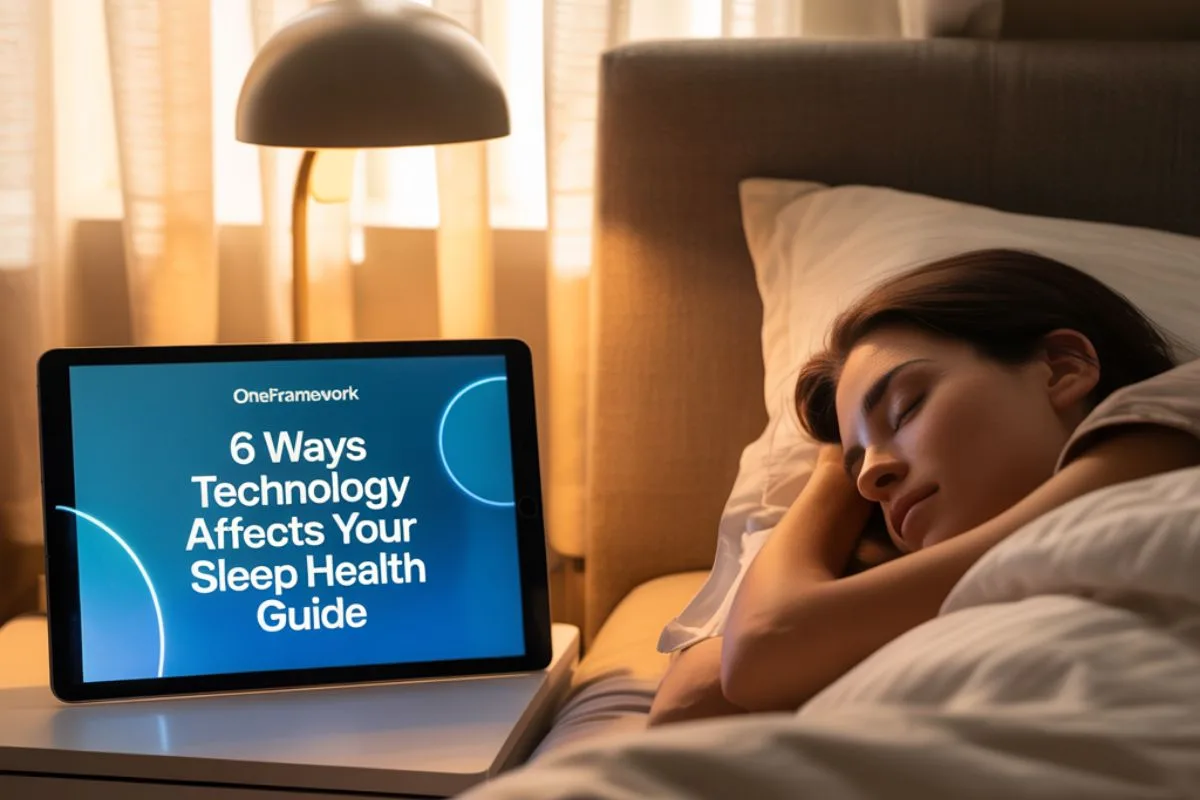
Technology has become a very important and inseparable part of modern life. We sleep next to our mobile phones, work on laptops during the day and scroll through social media platforms during late night hours often daily. While technology improves convenience, productivity and communication, it also directly and indirectly impacts sleep. In the hyper digital environment of today, understanding how technology impacts sleep is essential for maintaining modern sleep health.
PEOPLE ALSO READ : Blueoption Technologies: Powering Digital Transformation
This article introduces the “oneframework 6 ways technology affects your sleep health”, based on the most recent behavioural science, sleep physiology, and digital sleep health research. The OneFramework 6 Ways Technology Affects Your Sleep Health explains the mechanisms behind tech insomnia causes and how to reduce tech-related sleep issues to regain control of your nights.
THE one framework 6 ways technology affects your sleep health
The OneFramework 6 Ways Technology Affects Your Sleep Health organizes the influences related to technology into six major categories:
- Blue Light Exposure and Melatonin Suppression
- Cognitive Stimulation and Brain Overactivity
- Social Media and Emotional Arousal
- Notifications and Sleep Fragmentation
- Addictive Design and Screen Dependency
- Wearables, Tracking and Sleep Anxiety
Each pillar in the OneFramework 6 Ways Technology Affects Your Sleep Health works independently yet interacts with others while creating a complete picture of how smartphones interfere with sleep patterns.
Let’s explore each pillar of the OneFramework 6 Ways Technology Affects Your Sleep Health in detail.
1. Blue Light Exposure and Melatonin Suppression
How Blue Light Disrupts Your Sleep Cycle
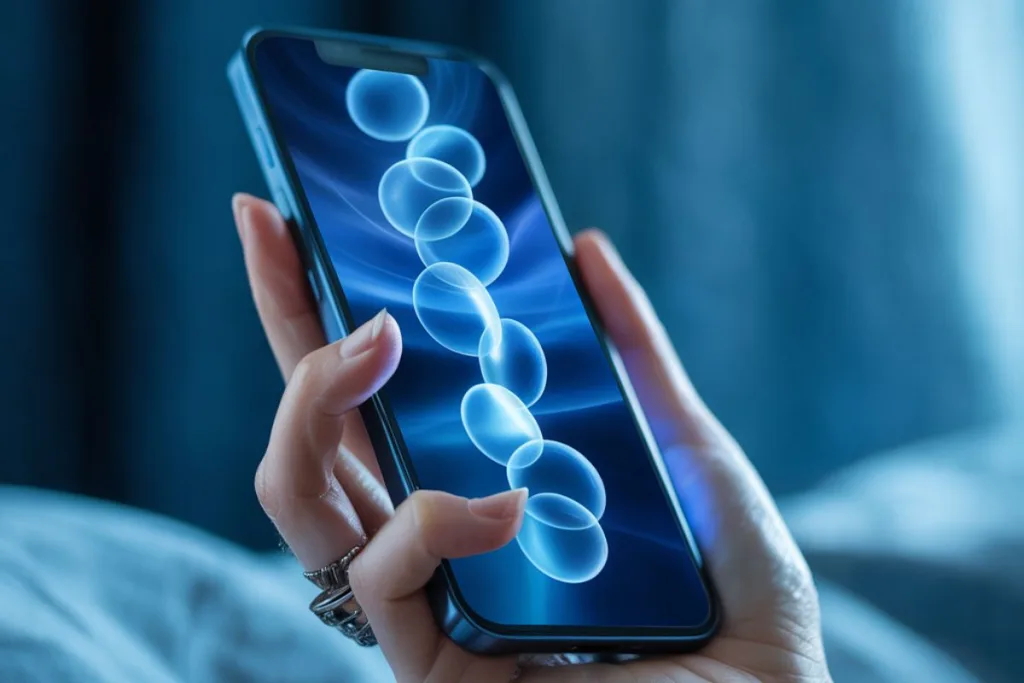
The first pillar of the OneFramework 6 Ways Technology Affects Your Sleep Health addresses blue light exposure. Screens release a wavelength of blue light that impersonates daylight. When exposed at night to this light, it suppresses melatonin the hormone that signals your brain that it’s time to sleep. This is one of the primary reasons why blue light keeps you awake and delays your internal body clock, making falling asleep harder.
Scientific Findings on Blue Light and Melatonin
Modern research supporting the OneFramework 6 Ways Technology Affects Your Sleep Health shows the connection between blue light and melatonin is significant:
- Blue light exposure can suppress melatonin by up to 23% to 40% depending on the intensity of blue light
- Even 30 minutes of scrolling can delay your biological sleep time
- Children and teens are even more sensitive due to developing eyes and brains
Real Life Examples
- Watching Netflix before bed
- Using TikTok or Instagram reels
- Gaming late at night
- Working on a laptop in bed
These behaviors send your brain a daytime signal even though it’s night, contributing to technology and sleep problems as explained in the OneFramework 6 Ways Technology Affects Your Sleep Health.
How to Minimize Blue Light Harm
- Use Night Mode, blue light filters or dim displays 1–2 hours before bed
- Switch to warm color temperatures at night
- Avoid bright screens at least 60 minutes before bedtime
2. Cognitive Stimulation & Brain Overactivity
Why Your Brain Stays Awake Even When You Feel Tired
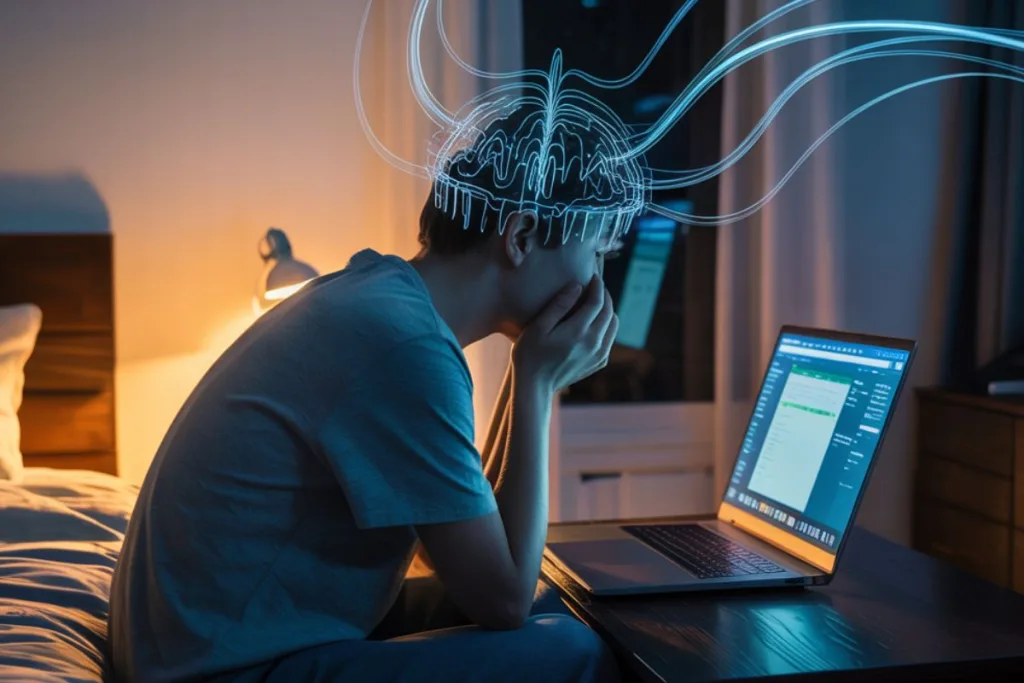
The second pillar of the OneFramework 6 Ways Technology Affects Your Sleep Health focuses on cognitive stimulation. Technology provides constant stimulation videos, messages, games, news, and endless scrolling. Even after screen use stops, your brain remains active and alert, making it difficult to “wind down.” This cognitive overload is a major contributor to tech insomnia causes.
Forms of Cognitive Stimulation
According to the OneFramework 6 Ways Technology Affects Your Sleep Health:
- Gaming increases adrenaline and heart rate
- Work emails activate problem-solving centers
- Scrolling crises or news triggers cognitive strain
- Watching fast-paced content heightens brain wave activity
Symptoms of Hyperactive Brain
- Restlessness
- Late-night alertness
- Difficulty falling asleep
- Racing thoughts in bed
Solutions
The OneFramework 6 Ways Technology Affects Your Sleep Health recommends:
- Stop high-stimulation tasks 1–2 hours before sleep
- Engage in calming alternatives such as reading, stretching, warm showers, or light music
- Use Bedtime Mode or Focus Mode of your phone to limit cognitive-heavy apps
3. Social Media and Sleep
How Social Platforms Hijack Your Emotional System
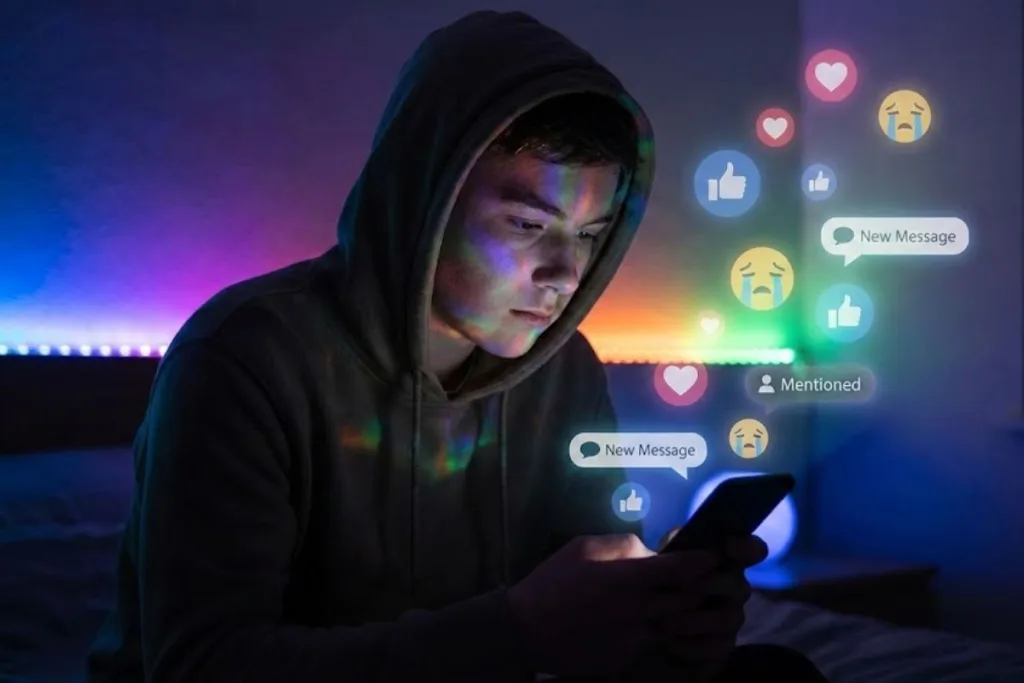
The third component of the OneFramework 6 Ways Technology Affects Your Sleep Health examines social media and sleep. Social media is designed to trigger emotional reactions excitement, envy, anxiety, fear, or dopamine-driven anticipation. When used at night, these emotions become arousal spikes that make sleep difficult.
Examples of Emotional Triggers
- Waiting for someone’s reply
- Seeing upsetting news
- Comparing your life to others
- Engaging in arguments or debates
- Doom-scrolling through negative content
Understanding effects of late-night scrolling on sleep through the OneFramework 6 Ways Technology Affects Your Sleep Health is crucial for better rest.
Physiological Impact
As outlined in the OneFramework 6 Ways Technology Affects Your Sleep Health, emotional arousal releases:
- Dopamine → craving more content
- Cortisol → stress and alertness
- Adrenaline → increased heart rate
These hormones delay sleep onset by making your body feel “awake.”
How to Reduce Emotional Impact
- Avoid social apps after a fixed time (9–10 PM)
- Disable notifications after sunset
- Use “Grayscale Mode” at night to reduce emotional engagement through color stimulation
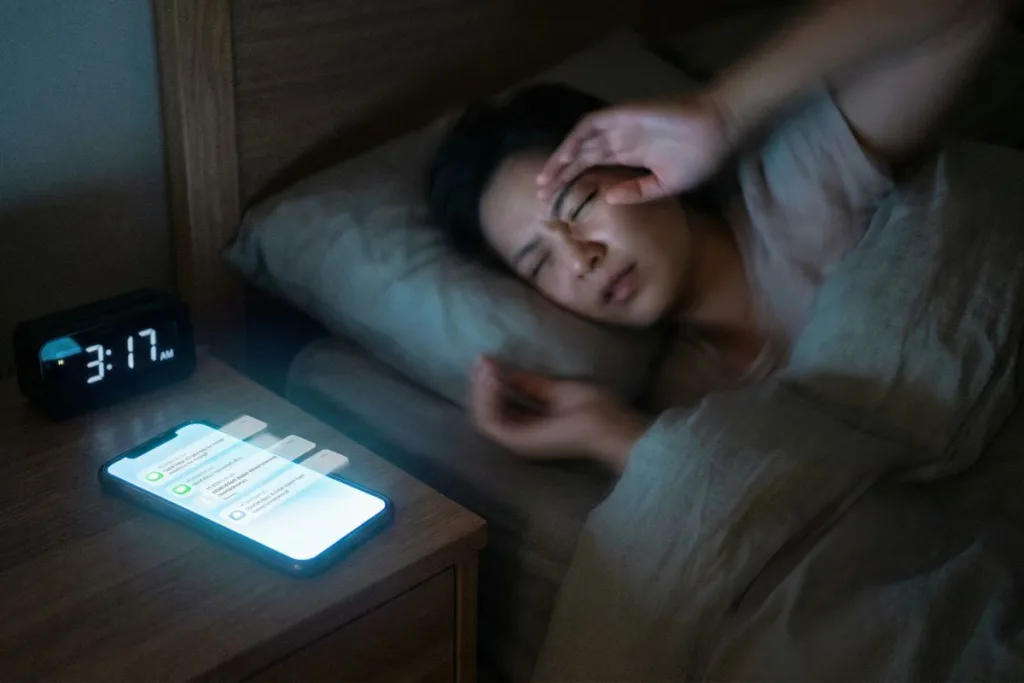
4. Notifications & Sleep Fragmentation
Micro-Awakenings Caused by Digital Alerts
The fourth pillar of the OneFramework 6 Ways Technology Affects Your Sleep Health addresses notifications. Even when you are asleep, notifications can fragment your sleep cycle. The vibration or sound may be subtle, but your brain still registers it. This is a key aspect of how smartphones interfere with sleep quality.
This causes:
- Light sleep
- Frequent mini-awakenings
- Reduced REM
- Daytime fatigue
PEOPLE ALSO READ : Maytag Centennial Commercial Technology: Full Guide to Features, Performance & Reliability
Types of Sleep-Breaking Alerts
The OneFramework 6 Ways Technology Affects Your Sleep Health identifies these common alerts:
- WhatsApp messages
- Emergency alerts
- Emails
- Social media notifications
- App updates
- Online activity pings
Even silent notifications create anticipation your brain stays alert waiting for the next one.
Solutions
- Turn Do Not Disturb mode on your phone every night
- Keep your phone on a nearby desk, not your bed
- Disable unnecessary app notifications
- Use “Bedtime Focus Mode” on iOS or “Sleep Mode” on Android
5. Addictive Design & Screen Dependency
Why It’s So Hard to Put Your Phone Down
The fifth element of the OneFramework 6 Ways Technology Affects Your Sleep Health explores phone addiction and sleep. Apps and platforms are engineered with persuasive design:
- Infinite scrolling
- Autoplay videos
- Notifications optimized for triggers
- Personalized feeds
- Reward loops
These mechanisms make you stay online longer than intended cutting into sleep time.
Consequences of Screen Dependency
According to the OneFramework 6 Ways Technology Affects Your Sleep Health:
- Reduced total sleep hours
- Falling asleep later
- Increased night-time screen urge
- Poor sleep quality
How to Break the Dependency
- Set screen time limits for nighttime hours
- Replace scrolling with offline hobbies (books, journaling, meditation)
- Don’t charge your phone near your bed
- Use app blockers after 9 PM (Freedom, Digital Wellbeing, Focus apps)
6. Wearables, Tracking & Sleep Anxiety
The Rise of Sleep Tracking Devices
The final pillar of the OneFramework 6 Ways Technology Affects Your Sleep Health examines sleep tracking anxiety. Smartwatches and apps measure:
- Sleep cycles
- Heart rate
- Oxygen levels
- REM & deep sleep
- Movements
While helpful, they can also cause sleep tracking anxiety, where people become overly focused on achieving “perfect sleep scores.”
How Sleep Anxiety Harms Your Rest
The OneFramework 6 Ways Technology Affects Your Sleep Health warns:
- You worry about the number on your tracker
- You try to “force” sleep, which increases stress
- You feel tense if your statistics are low
- Your mind focuses on performance instead of relaxation
This paradox leads to worse sleep, not better.
Healthy Use of Sleep Tech
- Treat data as general trends, not exact judgments
- Avoid looking at sleep scores first thing in the morning
- Don’t obsess over daily variations
- Use trackers for habits (bedtime consistency), not pressure
How to Use the OneFramework 6 Ways Technology Affects Your Sleep Health to Improve Digital Sleep Health
To make real changes and understand how to reduce tech-related sleep issues using the OneFramework 6 Ways Technology Affects Your Sleep Health, follow these three steps:
1. Identify Which of the 6 Areas Affects You the Most
The OneFramework 6 Ways Technology Affects Your Sleep Health helps you diagnose:
- If you stay awake due to scrolling → it’s emotional arousal + addictive design
- If you can’t fall asleep → blue light + cognitive stimulation
- If you wake up multiple times → notifications + nighttime alerts
2. Apply Targeted Solutions
Instead of generic advice, the OneFramework 6 Ways Technology Affects Your Sleep Health focuses on the pillar that affects you most.
3. Build a Tech-Sleep Routine
A 30–60-minute wind-down period where you unplug.
Modern Sleep-Friendly Recommended Digital Routine
- 9:00 PM → Enable Night Mode
- 9:30 PM → Turn on Sleep Focus Mode
- 10:00 PM → Stop using screens
- 10:10 PM → Do a calm activity (reading, stretching)
- 10:30 PM → Sleep environment ready (dark, cool, quiet)
- 10:40 PM → Sleep
Conclusion
The OneFramework 6 Ways Technology Affects Your Sleep Health simplifies the complicated relationship between technology and sleep problems into six powerful pillars. Once you understand how technology impacts sleep health through the OneFramework 6 Ways Technology Affects Your Sleep Health, you can target the behaviours causing the most harm.
Technology is not your enemy, but unregulated late-night use becomes a major sleep disruptor. By following the OneFramework 6 Ways Technology Affects Your Sleep Health and controlling exposure, adjusting habits, and creating healthy boundaries, you can reclaim high-quality modern sleep health in a digital-first world.
FAQs
1. What is the OneFramework 6 Ways Technology Affects Your Sleep Health?
The OneFramework 6 Ways Technology Affects Your Sleep Health is a comprehensive system that organizes how technology disrupts sleep into six categories: blue light exposure, cognitive stimulation, social media arousal, notifications, addictive design, and sleep tracking anxiety.
2. Does blue light really affect sleep?
Yes. Blue light and melatonin have a direct relationship blue light suppresses melatonin and delays your internal biological clock, making it harder to fall asleep. This is why blue light keeps you awake at night, as explained in the OneFramework 6 Ways Technology Affects Your Sleep Health.
3. Is checking social media before bed harmful?
Yes. Social media and sleep don’t mix well. It increases emotional arousal, mental stimulation, and dopamine activity, which delays sleep. The effects of late-night scrolling on sleep include delayed sleep onset and reduced sleep quality according to the OneFramework 6 Ways Technology Affects Your Sleep Health.
4. Do notifications disturb sleep even if I don’t hear them?
Yes. Anticipatory anxiety and micro-vibrations can fragment sleep. This is one way how smartphones interfere with sleep even when you think you’re not being disturbed, as outlined in the OneFramework 6 Ways Technology Affects Your Sleep Health.
5. Are sleep trackers accurate?
They provide helpful trends but are not 100% accurate. Over-focusing on them may increase sleep tracking anxiety and actually worsen your sleep quality, which is the sixth pillar of the OneFramework 6 Ways Technology Affects Your Sleep Health.
PEOPLE ALSO READ : Accend Technology Partners: Redefining Managed IT, Cloud, and Cybersecurity for Business Growth
6. How much screen time is safe at night?
To improve digital sleep health and avoid tech insomnia causes, avoid screens 1–2 hours before bed for optimal sleep quality. This is the best answer for how to reduce tech-related sleep issues as recommended by the OneFramework 6 Ways Technology Affects Your Sleep Health.
READ MORE : Super Converters