

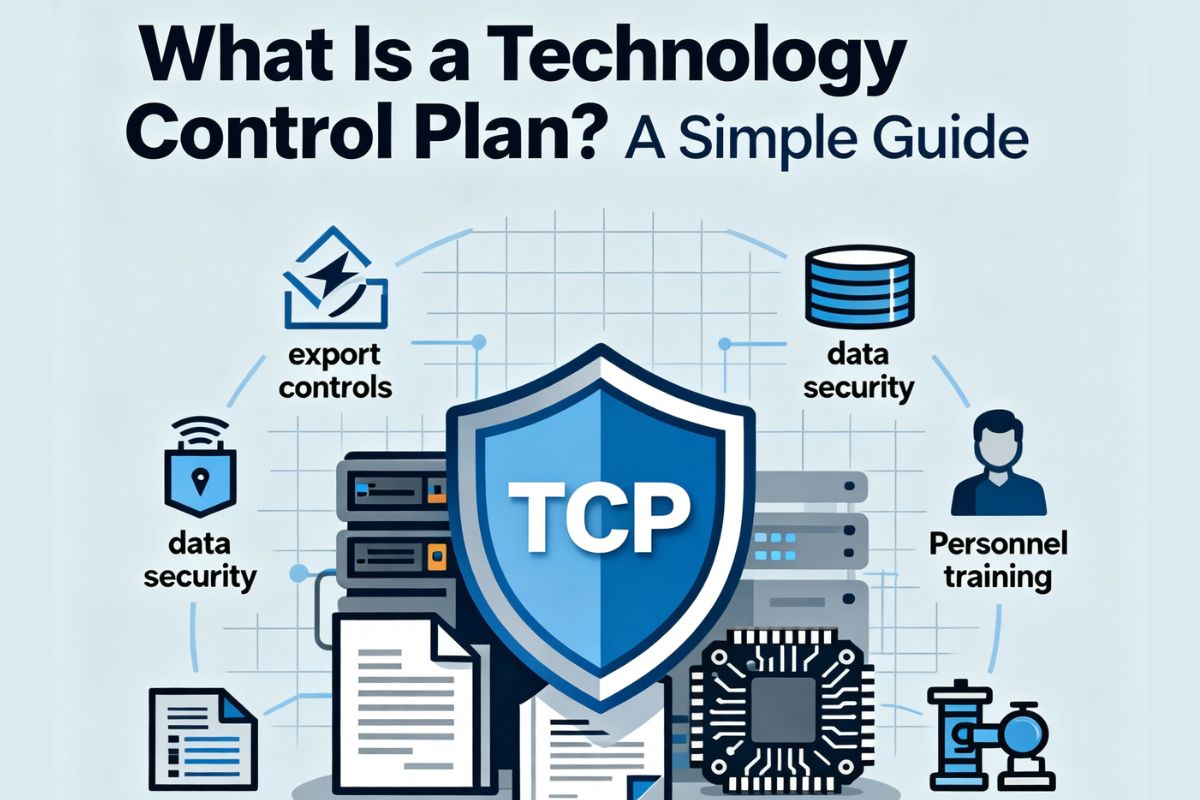
If you’re wondering what is a technology control plan, it’s a documented set of security measures designed to prevent unauthorized access to export-controlled technology, technical data, and equipment in compliance with U.S. export control regulations.
Who Needs a TCP and Why It Matters
Universities and research labs
Universities often ask what is a technology control plan and why they need it. Institutions conducting defense-related research or using export-controlled equipment rely on TCPs to protect sensitive information while maintaining academic openness and national security compliance.
Defense contractors and suppliers
For contractors, understanding what is a technology control plan is crucial. It defines how they safeguard technical data under ITAR or EAR, ensuring foreign nationals cannot access restricted information. A solid TCP supports eligibility for government defense contracts.
Startups with export-controlled work
Startups entering aerospace, cybersecurity, or AI often search what is a technology control plan early in development. Establishing one ensures compliance foundations are in place before scaling and engaging with federal or defense clients.
How TCPs Map to ITAR, EAR, and CUI
When organizations explore what is a technology control plan, they must understand how it aligns with U.S. export control frameworks.
PEOPLE ALSO READ : How New Technology Impact Human Computer Interactin
ITAR vs EAR vs CUI: key differences
| Framework | Who/What | Core TCP Focus | Typical Controls |
|---|---|---|---|
| ITAR | Defense articles/technical data | U.S. person access only; strong physical and data controls | Badging, segregated labs, encryption, visitor control |
| EAR | Dual-use items/tech | Control based on ECCN and end-use/end-user | Access lists, license checks, cloud rules, logging |
| CUI (DFARS/NIST) | Controlled unclassified info | NIST 800-171 technical/administrative controls | MFA, encryption, audit logs, training |
NIST 800-171/CMMC practices that fit your TCP
Many NIST 800-171 requirements directly support what is a technology control plan by aligning with export-control objectives:
- Access Control: Limit system access to authorized users
- Awareness and Training: Ensure personnel understand responsibilities
- Identification and Authentication: Verify user identities before access
- Media Protection: Safeguard controlled data on all media
- Physical Protection: Restrict physical access to systems and facilities
For organizations seeking CMMC certification, integrating these practices strengthens what is a technology control plan implementation and reduces compliance overlap.
Build Your TCP in 7 Steps (Template Included)
When building or updating what is a technology control plan, follow these structured steps:
1) Scope data, equipment, and people
Start by identifying export-controlled assets:
- Inventory controlled data (files, drawings, software)
- Catalog controlled equipment
- Map storage and access locations
- Identify personnel access needs
- Document classification (USML categories, ECCNs)
2) Assign roles (RACI) and ownership
Clearly define accountability in what is a technology control plan:
- Empowered Official: Overall compliance authority
- Export Compliance Officer: Manages daily TCP operations
- IT Security: Implements digital controls
- Facility Security: Handles physical safeguards
- HR: Manages screening and training
- Project Leads: Ensure project-level compliance
3) Physical controls (rooms, badges, visitors)
Physical security defines much of what is a technology control plan:
- Restricted work zones
- Locks and badge systems
- Visitor control procedures
- Signage for restricted areas
- Secure equipment storage
4) IT controls (MFA, encryption, logging, cloud)
IT safeguards are central to what is a technology control plan:
- Multi-factor authentication for controlled systems
- Data encryption at rest and in transit
- Comprehensive audit logging
- Access based on least privilege
- Export-compliant cloud services
- Data loss prevention (DLP) tools
5) People controls (screening, NDAs, training)
Human factors often decide whether what is a technology control plan succeeds:
- Citizenship and export screening
- Signed NDAs
- Mandatory awareness and role-based training
- Controlled onboarding/offboarding
- Clear reporting of violations
6) Marking, handling, recordkeeping
Consistent documentation is key in what is a technology control plan:
- Mark controlled documents properly
- Handle materials under secure protocols
- Maintain access and training logs
- Document license usage
- Retain records for five years or more
7) Test, monitor, and improve
Continuous evaluation keeps what is a technology control plan effective:
- Regular self-audits and control tests
- Log reviews and physical inspections
- Annual updates as regulations evolve
- Document lessons learned from incidents
Templates and Checklists
TCP section map (copy-ready)
- Policy Purpose and Scope
- Regulatory Background
- Roles and Responsibilities
- Asset Inventory and Classification
- Physical Security Controls
- Information Security Controls
- Personnel Procedures
- Marking and Handling
- Recordkeeping
- Incident Response
- Self-Assessment
- Appendices and Forms
Visitor log and badging example
A sample process demonstrating what is a technology control plan looks like in practice:
- Employee submits visitor request 48+ hours before visit
- Compliance team screens visitor for export issues
- Export Officer approves visit
- Badge issued with controlled access
- Escort required throughout visit
- Log entry recorded
- Badge returned upon exit
Training log and access roster
Tracking participation is part of what is a technology control plan:
Training Log Fields:
- Name/ID
- Topic
- Completion/Expiration Dates
- Test Results
- Acknowledgment
Access Roster:
- Name
- Role
- Citizenship
- Authorization Basis
- Systems/Areas Approved
- Approving Official
Real-World Scenarios
University lab with foreign students
Many universities first learn what is a technology control plan when conducting research with foreign nationals.
TCP Solution:
- Separate controlled and open labs
- Different network segments
- Document control and markings
- Faculty export compliance training
Small OEM supplier with CUI
Suppliers handling CUI often need to establish what is a technology control plan for ITAR data.
TCP Solution:
- Designate compliant workstations
- Meet NIST 800-171 standards
- Segregate manufacturing areas
- Screen and train staff
Remote work and cloud storage
Companies enabling remote access must rethink what technology control plan for distributed teams.
TCP Solution:
- Managed laptops
- VPN with MFA
- Virtual desktop infrastructure
- No local file storage
- Export-compliant cloud
- Remote audits
Pros and Cons of a TCP
| Pros | Cons |
|---|---|
| Clarifies responsibilities | Resource intensive |
| Reduces export-control risks | May slow collaboration |
| Demonstrates due diligence | Requires constant updates |
| Enables access to defense work | Adds admin workload |
| Enhances audit readiness | Limits foreign participation |
Understanding these helps balance practicality when defining what is technology control plan for your organization.
PEOPLE ALSO READ : TechMe Your Future in Technology Starts Here
Audit Readiness and Penalties
Common mistakes and quick fixes
When implementing what is a technology plan, avoid these pitfalls:
- Missing inventory of controlled data
- Poor document marking
- Weak screening of foreign nationals
- Gaps in training or records
- Improper cloud storage
Quick Fixes:
- Run rapid inventory audits
- Re-mark sensitive data
- Restrict access temporarily
- Conduct refresher training
- Migrate data to compliant storage
What evidence to keep (and for how long)
Documentation supports what is a technology control plan in every audit:
- Training and access records (5 years)
- Visitor logs (3–5 years)
- Classification notes (5+ years)
- License usage and incidents (5+ years)
Voluntary disclosure basics
If violations occur, knowing what is a technology control plan includes how to respond:
- Contain the event
- Preserve evidence
- Consult compliance counsel
- Submit voluntary disclosure
- Document remediation steps
Proactive disclosure often minimizes penalties.
FAQs
- What is a technology control plan legally?
- It’s not always mandatory but proves compliance with ITAR, EAR, and CUI.
- How detailed should it be?
- Depth depends on the volume and sensitivity of controlled data.
- Can one TCP cover multiple frameworks?
- Yes, if you clearly separate ITAR, EAR, and CUI requirements.
- How often to update?
- Annually or after regulatory or operational changes.
- Do cloud services qualify?
- Only export-compliant ones aligned with your TCP.