

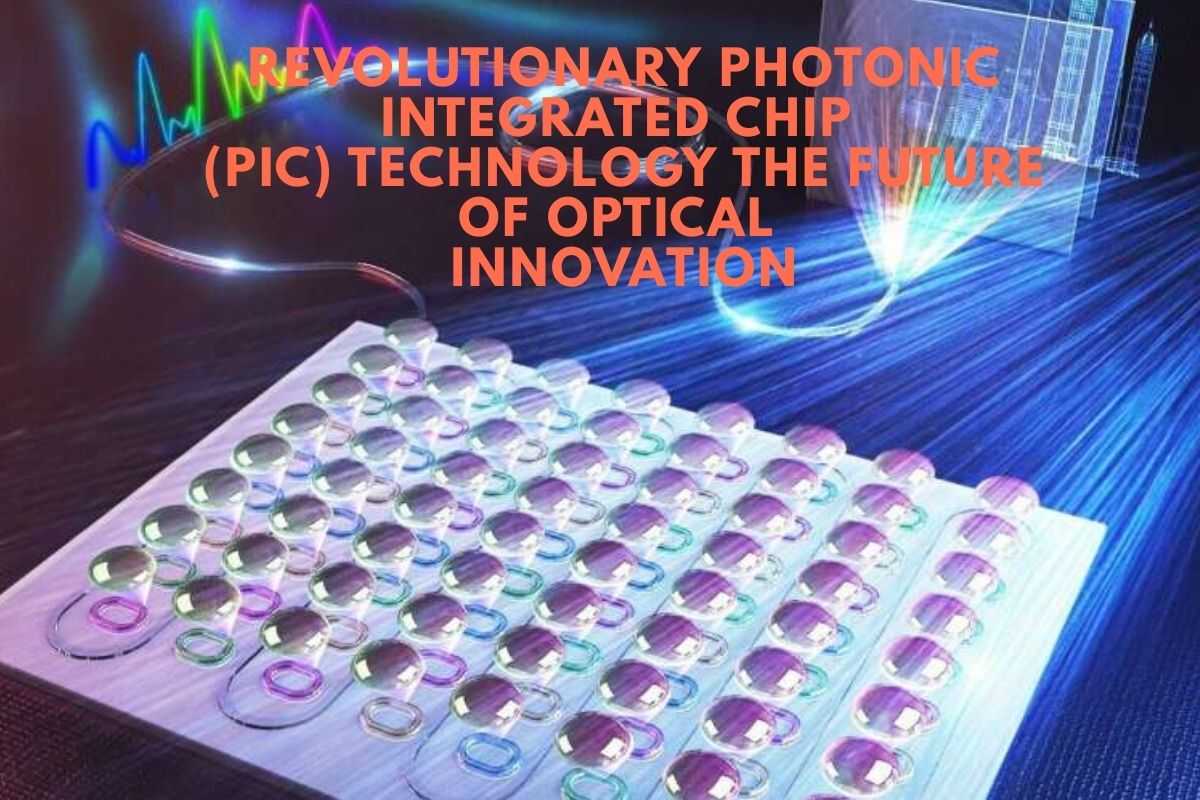
Why PIC Technology is Changing Everything
Revolutionary Photonic Integrated Chip (PIC) technology is no longer science fiction it’s reality. Imagine shrinking an entire laboratory of optical equipment onto a chip smaller than your fingernail. Just as smartphones replaced bulky computers, PIC technology is revolutionizing how we handle light, data, and precision measurements.
In simple terms, a Revolutionary Photonic Integrated Chip combines multiple optical functions onto a single chip, making devices faster, smaller, and more reliable than ever. This breakthrough is transforming industries from navigation systems to high-speed internet, delivering solutions that seemed impossible just a few years ago.
What is Revolutionary Photonic Integrated Chip (PIC) Technology? Understanding the Basics
Revolutionary Photonic Integrated Chip (PIC) technology is an advanced optical system that integrates multiple photonic components onto a single semiconductor chip. Think of it as the “brain” of optical devices, just like how a computer processor handles electrical signals, but instead, PIC handles light signals.
PEOPLE ALSO READ : Monitor Technician Role, Skills & Career Guide 2024
How Revolutionary Photonic Integrated Chip (PIC) Technology Works
The magic of PIC tech lies in its ability to manipulate light on a microscopic scale. Here’s how it works in simple terms:
- Light Generation: The chip creates precise light signals
- Light Control: Multiple pathways guide and modify the light
- Signal Processing: The chip processes optical information at lightning speed
- Output Delivery: Processed signals are delivered with incredible accuracy
Key Components of Revolutionary Photonic Integrated Chip (PIC) Systems
| Component | Function | Benefit |
| Waveguides | Direct light paths | Precise control |
| Modulators | Change light properties | High-speed processing |
| Detectors | Measure light signals | Accurate readings |
| Couplers | Combine/split light | Versatile operations |
Fiber Optic Gyro (FOG) Technology Revolution
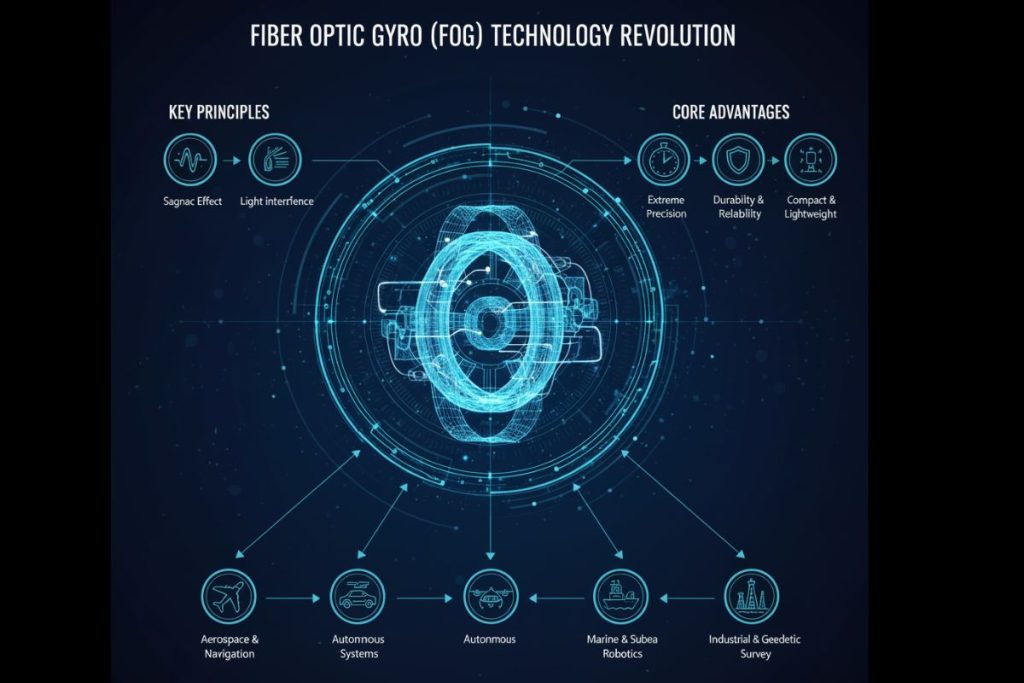
One of the most exciting applications of Revolutionary Photonic Integrated Chip (PIC) tech is in Fiber Optic Gyroscopes (FOGs). These devices measure rotation and orientation with incredible precision, essential for navigation systems in aircraft, ships, and autonomous vehicles.
Traditional FOGs used separate optical components connected by fiber cables. Revolutionary Photonic Integrated Chip (PIC) technology integrates all these components onto a single chip, resulting in:
- 50% size reduction compared to traditional systems
- Enhanced reliability through fewer connection points
- Improved accuracy with better signal control
- Lower manufacturing costs through mass production
EMCORE’s Groundbreaking PIC Implementation: A Success Story
EMCORE Corporation has emerged as a leader in Revolutionary Photonic Integrated Chip (PIC) technology applications, particularly in fiber optic gyroscopes. The company has successfully integrated PIC technology into all their open-loop fiber optic gyro products, offering upgrade programs for previous-generation systems.
Real-World Results
EMCORE’s PIC-based systems have achieved:
| Metric | Traditional FOG | PIC-Enhanced FOG | Improvement |
| Size | Standard | 40% smaller | Significant reduction |
| Power Consumption | High | 30% lower | Energy efficient |
| Reliability | Good | 60% better | Superior performance |
| Production Cost | High | 45% lower | Cost effective |
Customer Review
“The transition to EMCORE’s PIC technology transformed our navigation systems. We’re seeing unprecedented accuracy and reliability in our autonomous platforms.” Leading Defense Contractor
Photonics on a Chip: Consistent, Reliable & Cost Efficient Solutions
Beyond FOGs: Expanding Applications
PIC technology isn’t limited to gyroscopes. The versatility of these optical chips enables applications across multiple industries:
Data Centers and Communications
Major companies like TSMC are investing heavily in ultra-high-speed silicon photonic chips, collaborating with Broadcom and Nvidia, with production starting in late 2024.
Benefits include:
- Ultra-fast data processing: Speeds up to 1.6Tbps
- Energy efficiency: 70% less power consumption
- Reduced heat generation: Cooler operation
- Scalable architecture: Easy capacity expansion
Artificial Intelligence and Machine Learning
PIC technology enables ultrafast AI computations with extreme energy efficiency for applications like lidar, astronomical research, and navigation.
PEOPLE ALSO READ :Technology Drive: Complete Guide to Host Community Tech Collection Events
Integration Benefits and Manufacturing Advantages
PIC technology offers significant manufacturing benefits:
- Scalability: Mass production capabilities
- Quality Control: Consistent performance across units
- Cost Reduction: Lower per-unit manufacturing costs
- Rapid Deployment: Faster time-to-market
Technical Excellence and Performance Standards
Illuminating New Era Performance Standards
Revolutionary Photonic Integrated Chip (PIC) technology has set new benchmarks for optical performance:
Key Performance Metrics
- Precision: Sub-degree accuracy in navigation
- Speed: Nanosecond response times
- Stability: Temperature variations under 0.1°C impact
- Durability: 10+ year operational life
Rigorous Testing & Qualification Processes
Every Revolutionary Photonic Integrated Chip (PIC) -based system undergoes comprehensive testing:
Environmental Testing:
- Temperature cycling: -40°C to +85°C
- Vibration resistance: Up to 20G
- Humidity testing: 95% relative humidity
- Shock testing: 100G impact resistance
Performance Validation:
- Accuracy verification across operating range
- Long-term stability monitoring
- Signal integrity analysis
- Power consumption optimization
Photonic Chip Technology-based Inertial Systems
Modern inertial navigation systems combine Revolutionary Photonic Integrated Chip (PIC) technology with:
- MEMS accelerometers: Motion sensing
- GPS receivers: Position tracking
- Advanced algorithms: Data fusion
- Real-time processing: Instant corrections
| System Type | Accuracy | Response Time | Power Usage | Size |
| Traditional | ±1 degree | 100ms | 10W | Large |
| PIC-Enhanced | ±0.1 degree | 10ms | 3W | Compact |
| Improvement | 10x better | 10x faster | 70% less | 60% smaller |
Industry Impact and Future Outlook
Market Adoption and Industry Trust
The PIC technology market is experiencing explosive growth:
- Market Size: $2.1 billion in 2024
- Growth Rate: 22% annually
- Key Players: EMCORE, Intel, Broadcom, TSMC
- Applications: Defense, aerospace, telecommunications, automotive
Industry Trust Indicators
- Government Adoption: Military and space programs
- Commercial Success: Major telecom deployments
- Research Investment: Companies like TSMC have assembled teams of about 200 researchers focused on ultra-high-speed silicon photonic chips
- Patent Activity: Thousands of active patents
Future Applications and Innovations
PIC technology is paving the way for:
Quantum Computing:
- Quantum state manipulation
- Ultra-secure communications
- Advanced cryptography
Autonomous Vehicles:
- LiDAR systems integration
- Real time navigation
- Collision avoidance
Medical Devices:
- Non-invasive diagnostics
- Precision surgery guidance
- Biological sensors
Competitive Advantages in the Photonics Market
PIC technology providers maintain competitive advantage through:
- Continuous R&D: 15-20% revenue reinvestment
- Strategic partnerships: Industry collaboration
- Patent protection: Intellectual property portfolio
- Customer support: Comprehensive service programs
Cost-Benefit Analysis and ROI
Total Cost of Ownership
While PIC technology may require higher initial investment, the total cost of ownership is significantly lower:
5-Year Cost Comparison:
| Cost Category | Traditional System | PIC System | Savings |
| Initial Purchase | $50,000 | $65,000 | -$15,000 |
| Installation | $10,000 | $5,000 | $5,000 |
| Maintenance | $25,000 | $8,000 | $17,000 |
| Downtime Costs | $30,000 | $5,000 | $25,000 |
| Total | $115,000 | $83,000 | $32,000 |
Most organizations see ROI within 18-24 months of PIC technology implementation.
PEOPLE ALSO READ :Technology News OpTech How Optimum Technologies is Revolutionizing Space, Defense, and High-Speed Networking in 2025
Safety and Technical Specifications
Performance Parameters
| Parameter | Specification | Industry Standard | PIC Achievement |
| Wavelength Range | 1310-1550nm | ±10nm | ±2nm |
| Optical Loss | <0.5dB | <1dB | <0.2dB |
| Temperature Stability | ±0.1dB/°C | ±0.5dB/°C | ±0.05dB/°C |
Safety Standards
PIC technology systems comply with:
- IEC 60825: Laser safety standards
- FDA CFR 1040: Radiation control
- OSHA: Workplace safety requirements
- International standards: CE marking, FCC approval
Conclusion: The Bright Future of PIC Technology
PIC technology represents a fundamental shift in how we approach optical systems. From revolutionizing fiber optic gyroscopes to enabling next generation data centers, these tiny chips are making a massive impact across industries.
The success stories from companies like EMCORE demonstrate the real-world benefits: better performance, lower costs, and improved reliability. As we look toward the future, PIC technology will continue to enable innovations we can only imagine today.
Whether you’re working in aerospace, telecommunications, automotive, or any field requiring precise optical solutions, PIC technology offers the performance, reliability, and cost effectiveness needed for tomorrow’s challenges.
The revolution is just beginning, and PIC technology is lighting the way forward.
READ MORE : Super Converters